> Antigen, Antibodies, ELISA, Western Blot > Primary Antibody > Polyclonal Antibodies > Neurotensin Receptor 1 (extracellular) AntibodyBrand |
Leading Biology | Catalog Number |
AMM06650G |
Product Type |
Polyclonal Antibodies | Field of Research |
|
Product Overview |
We constantly strive to ensure we provide our customers with the best antibodies. As a result of this work we offer this antibody in purified format.
We are in the process of updating our datasheets. If you have any questions regarding this update, please feel free to contact our technical support team.
This product is a high quality Neurotensin Receptor 1 (extracellular) antibody.
|
||
Molecular Weight |
46259 Da
|
||
Host |
Rabbit
|
||
Species Reactivity |
Human
|
||
Target |
Peptide EQNRSADGQHAGGLVC corresponding to amino acid residues 209-224 of human Neurotensin Receptor 1 (Accession P30989). 2nd extracellular loop.
|
||
GeneID |
|||
UniProt ID |
|||
Summary |
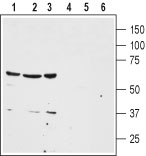
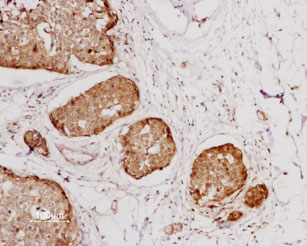
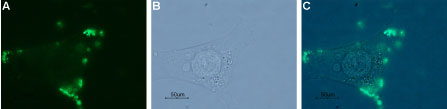
Neurotensin receptor 1 (NTS1) is one of three receptors that mediate the effects of the tridecapeptide neurotensin. Neurotensin is synthesized and secreted from neurons in the central neural system (CNS) and from endocrine cells in the gastrointestinal tract. NTS1 and NTS2 belong to the 7-transmembrane domain, G protein-coupled receptor (GPCR) superfamily while the third neurotensin receptor NTS3 (also called Sortilin) is a type I membrane protein with a large extracellular domain. Both NTS1 and NTS3 bind neurotensin with high affinity while NTS2 binds it with low affinity.1 NTS1 signals preferentially through Gaq, resulting in the activation phopholipase C and intracellular Ca2+ mobilization, although coupling with Gi/o and to Gs has been observed in some expression systems. NTS1 is mainly expressed in the brain and gastrointestinal tract. In the brain, NTS1 mediates body temperature regulation, feeding behavior and locomotion regulation. One of the best studied roles of NTS1 is the regulation of dopamine release suggesting that NTS1 can be a suitable target for the development of a new class of anti-psychotics.2 In the periphery, NTS1 expression has been linked to the control of intestine motility and in the stimulation of growth of the intestine mucosa in both physiological and pathological conditions. NTS1 has been shown to be upregulated in several human cancers where it stimulates tumor growth in response to locally produced neurotensin peptide.3 Abgent is pleased to offer a highly specific antibody directed against an epitope at the extracellular 2nd loop of the human NTS1. Anti-Neurotensin Receptor-1 (extracellular) antibody (#AG1174) can be used in Western blot analysis, immunohistochemical, immunocytochemical, and flow cytometry applications.
|
||
Form |
Affinity purified antibody, Liquid |
||
Storage & Stability |
Store at +4°C short term. For long-term storage, aliquot and store at -20°C or below. Stable for 12 months at -20°C. Avoid repeated freeze-thaw cycles.
|
||
Applications |
WB, IHC, FC, ICC, LCI
|
||
Dilution |
WB~~1:200-1:2000
IHC~~1:100
ICC~~1:20
IF~~1:20
|
||
Synonyms |
Neurotensin receptor type 1, NT-R-1, NTR1, High-affinity levocabastine-insensitive neurotensin receptor, NTRH, NTSR1, NTRR
|
||
Images |
|
||
Specification |
|||
Quantity |
|
||
| Select | Brand | Catalog No. | Product Name | Pack Size | Type | Field of Research | Specification | Quantity | Price(USD) | |
| 1 | Leading Biology | APR03440G | ITGA11 Antibody (N-term) | 100 μl | Polyclonal Antibodies |
|
$495.00 | Add Ask | ||
| 2 | Leading Biology | APR04537G | CMIP Antibody (C-term) | 100 μl | Polyclonal Antibodies |
|
$495.00 | Add Ask | ||
| 3 | Leading Biology | APR12422G | Human H4 Histamine Receptor (extracellular) Antibody | 50 μl | Polyclonal Antibodies |
|
$695.00 | Add Ask | ||
| 4 | Leading Biology | APR03844G | UBE2W Antibody (C-term) | 100 μl | Polyclonal Antibodies |
|
$495.00 | Add Ask | ||
| 5 | Leading Biology | APR04349G | HECTD2 Antibody (N-term) | 100 μl | Polyclonal Antibodies |
|
$495.00 | Add Ask | ||
| 6 | Leading Biology | APR03502G | IGHG1 Antibody (Center) | 100 μl | Polyclonal Antibodies |
|
$495.00 | Add Ask |
Leading Biology Inc.
2600 Hilltop DR, Building G, B Suite C138
Richmond, CA, 94806
Tel: 1-661-524(LBI)-0262
Email: info@leadingbiology.com

You have 0 item in your cart
You have 0 item in your inquiry list