> Antigen, Antibodies, ELISA, Western Blot > Primary Antibody > Polyclonal Antibodies > A1 Adenosine Receptor AntibodyBrand |
Leading Biology | Catalog Number |
AMM05522G |
Product Type |
Polyclonal Antibodies | Field of Research |
|
Product Overview |
We constantly strive to ensure we provide our customers with the best antibodies. As a result of this work we offer this antibody in purified format.
We are in the process of updating our datasheets. If you have any questions regarding this update, please feel free to contact our technical support team.
This product is a high quality A1 Adenosine Receptor antibody.
|
||
Molecular Weight |
36512 Da
|
||
Host |
Rabbit
|
||
Species Reactivity |
Human, Mouse, Rat
|
||
Target |
Peptide (C)KKVSASSGDPQKYYGKE, corresponding to amino acid residues 213-229 of human A1AR (Accession P30542). 3rd intracellular loop.
|
||
GeneID |
|||
UniProt ID |
|||
Summary |
Adenosine is an endogenous nucleoside generated locally in tissues under conditions of hypoxia, ischemia, or inflammation. It modulates a variety of physiological functions in many tissues including brain and heart.1,2It exerts its action via four specific adenosine receptors (also named P1 purinergic receptors): A1-Adenosine Receptor (A1AR), A2A-Adenosine Receptor (A2AAR), A2B-Adenosine Receptor (A2BAR), and A3-Adenosine Receptor (A3AR). All are integral membrane proteins and members of the G Protein-Coupled Receptor superfamily. They share a common structure of seven putative transmembrane domains, an extracellular amino terminus, a cytoplasmic carboxyl terminus, and a third intracellular loop that is important in binding G proteins.1-3 The various adenosine receptors can be distinguished on the basis of their differential selectivity for adenosine analogs.1-3A1AR is widely distributed and has been well characterized. High expression of A1AR is found in brain (mainly in the cortex, cerebellum, and hippocampus), dorsal horn of the spinal cord, adrenal gland, and atria, and to a lower extent in several other tissues including adipose tissue, colon, and kidney.2,4A1AR modulates the activity of several ion channels. Activation of A1AR (by adenosine, its major agonist) inhibits N-type Ca2+ channels via a voltage-dependent, pertussis toxin (PTX)-sensitive pathway in neurons of the rat major pelvic ganglia (MPG).5Since A1AR is the most prominent adenosine receptor in adipocytes, it has become a natural target for research on obesity, which is a major health problem.6,7 A possible role in cell proliferation and carcinogenesis has also been suggested for A1AR.8-10
|
||
Form |
Affinity purified antibody, Liquid |
||
Storage & Stability |
Store at +4°C short term. For long-term storage, aliquot and store at -20°C or below. Stable for 12 months at -20°C. Avoid repeated freeze-thaw cycles.
|
||
Applications |
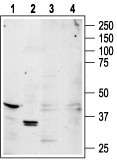
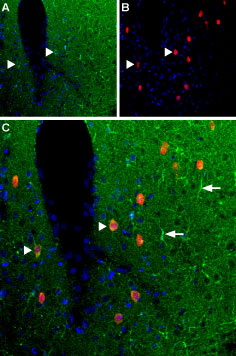
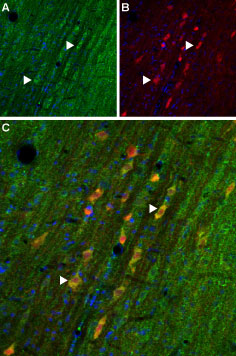
WB, IHC, ICC
|
||
Dilution |
WB~~1:200-1:2000
ICC~~1:100
|
||
Synonyms |
Adenosine receptor A1, ADORA1
|
||
Images |
|
||
Specification |
|||
Quantity |
|
||
| Select | Brand | Catalog No. | Product Name | Pack Size | Type | Field of Research | Specification | Quantity | Price(USD) | |
| 1 | Leading Biology | APR03440G | ITGA11 Antibody (N-term) | 100 μl | Polyclonal Antibodies |
|
$495.00 | Add Ask | ||
| 2 | Leading Biology | APR04537G | CMIP Antibody (C-term) | 100 μl | Polyclonal Antibodies |
|
$495.00 | Add Ask | ||
| 3 | Leading Biology | APR12422G | Human H4 Histamine Receptor (extracellular) Antibody | 50 μl | Polyclonal Antibodies |
|
$695.00 | Add Ask | ||
| 4 | Leading Biology | APR03844G | UBE2W Antibody (C-term) | 100 μl | Polyclonal Antibodies |
|
$495.00 | Add Ask | ||
| 5 | Leading Biology | APR04349G | HECTD2 Antibody (N-term) | 100 μl | Polyclonal Antibodies |
|
$495.00 | Add Ask | ||
| 6 | Leading Biology | APR03502G | IGHG1 Antibody (Center) | 100 μl | Polyclonal Antibodies |
|
$495.00 | Add Ask |
Leading Biology Inc.
2600 Hilltop DR, Building G, B Suite C138
Richmond, CA, 94806
Tel: 1-661-524(LBI)-0262
Email: info@leadingbiology.com

You have 0 item in your cart
You have 0 item in your inquiry list