> Antigen, Antibodies, ELISA, Western Blot > Primary Antibody > Polyclonal Antibodies > ANG AntibodyBrand |
Leading Biology | Catalog Number |
APG01868G |
Product Type |
Polyclonal Antibodies | Field of Research |
|
Product Overview |
We constantly strive to ensure we provide our customers with the best antibodies. As a result of this work we offer this antibody in purified format.
We are in the process of updating our datasheets. If you have any questions regarding this update, please feel free to contact our technical support team.
This product is a high quality ANG antibody.
|
||
Molecular Weight |
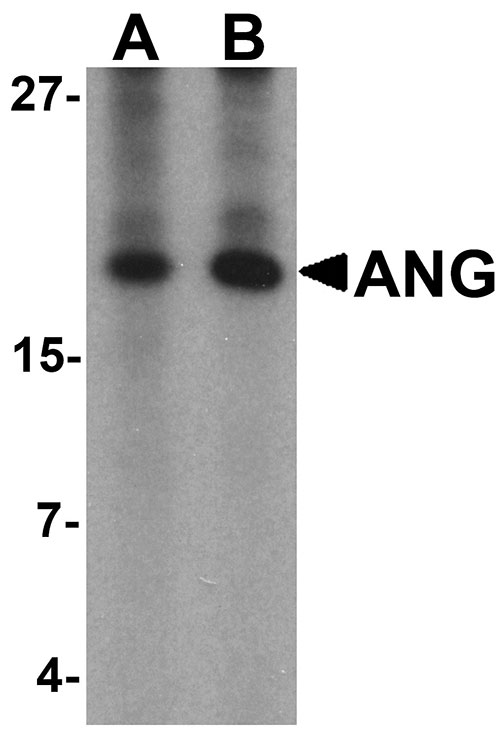
16 kDa
|
||
Cellular Localization |
Antigen Cellular Localization:
Secreted, extracellular space, extracellular matrix, basement membrane. Nucleus, nucleolus. Note=Rapidly endocytosed by target cells and translocated to the nucleus where it accumulates in the nucleolus and binds to DNA
|
||
Host |
Rabbit
|
||
Species Reactivity |
Human, Mouse, Rat
|
||
Target |
ANG; Two alternatively spliced transcript variants have been observed.
|
||
Isotype |
IgG
|
||
Symbol |
RNASE5
|
||
GeneID |
|||
UniProt ID |
|||
Function |
Binds to actin on the surface of endothelial cells; once bound, angiogenin is endocytosed and translocated to the nucleus. Stimulates ribosomal RNA synthesis including that containing the initiation site sequences of 45S rRNA. Cleaves tRNA within anticodon loops to produce tRNA-derived stress-induced fragments (tiRNAs) which inhibit protein synthesis and triggers the assembly of stress granules (SGs). Angiogenin induces vascularization of normal and malignant tissues. Angiogenic activity is regulated by interaction with RNH1 in vivo.
|
||
Summary |
ANG Antibody: Angiogenin (ANG or ANG I) is important for the process of neovascularization and formation of new blood vessels. ANG is similar to pancreatic ribonuclease A and functions as a tRNA-specific ribonuclease that abolishes protein synthesis by specifically hydrolyzing cellular tRNAs. It interacts with endothelial cell-surface actin and may cause changes in the cell cytoskeleton. ANG is thought to be involved in the development of solid tumors and its antagonists are capable of inhibiting tumor growth. Defects in ANG are the cause of susceptibility to amyotrophic lateral sclerosis type 9 (ALS9). Angiogenin is a genetic link between ALS and PD.
|
||
Form |
Liquid |
||
Storage & Stability |
Store at +4°C short term. For long-term storage, aliquot and store at -20°C or below. Stable for 12 months at -20°C. Avoid repeated freeze-thaw cycles.
|
||
Applications |
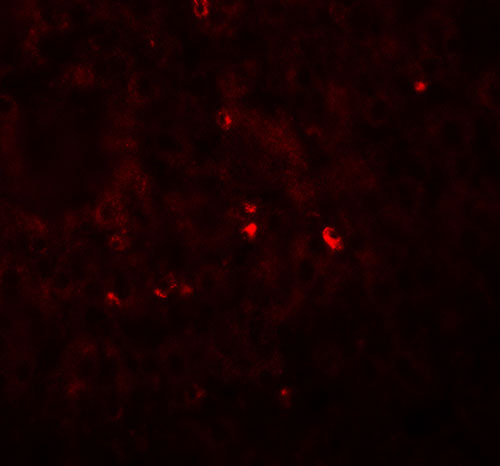
WB, IF, E
|
||
Images |
|
||
Specification |
|||
Quantity |
|
||
| Select | Brand | Catalog No. | Product Name | Pack Size | Type | Field of Research | Specification | Quantity | Price(USD) | |
| 1 | Leading Biology | APR03440G | ITGA11 Antibody (N-term) | 100 μl | Polyclonal Antibodies |
|
$495.00 | Add Ask | ||
| 2 | Leading Biology | APR04537G | CMIP Antibody (C-term) | 100 μl | Polyclonal Antibodies |
|
$495.00 | Add Ask | ||
| 3 | Leading Biology | APR12422G | Human H4 Histamine Receptor (extracellular) Antibody | 50 μl | Polyclonal Antibodies |
|
$695.00 | Add Ask | ||
| 4 | Leading Biology | APR04349G | HECTD2 Antibody (N-term) | 100 μl | Polyclonal Antibodies |
|
$495.00 | Add Ask | ||
| 5 | Leading Biology | APR03844G | UBE2W Antibody (C-term) | 100 μl | Polyclonal Antibodies |
|
$495.00 | Add Ask | ||
| 6 | Leading Biology | APR03502G | IGHG1 Antibody (Center) | 100 μl | Polyclonal Antibodies |
|
$495.00 | Add Ask |
Leading Biology Inc.
2600 Hilltop DR, Building G, B Suite C138
Richmond, CA, 94806
Tel: 1-661-524(LBI)-0262
Email: info@leadingbiology.com

You have 0 item in your cart
You have 0 item in your inquiry list