> Antigen, Antibodies, ELISA, Western Blot > Primary Antibody > Polyclonal Antibodies > Angiotensin II Receptor Type-1 (extracellular) AntibodyBrand |
Leading Biology | Catalog Number |
APG01872G |
Product Type |
Polyclonal Antibodies | Field of Research |
|
Product Overview |
We constantly strive to ensure we provide our customers with the best antibodies. As a result of this work we offer this antibody in purified format.
We are in the process of updating our datasheets. If you have any questions regarding this update, please feel free to contact our technical support team.
This product is a high quality Angiotensin II Receptor Type-1 (extracellular) antibody.
|
||
Molecular Weight |
41061 Da
|
||
Host |
Rabbit
|
||
Species Reactivity |
Human, Mouse, Rat
|
||
Target |
Peptide NSSTEDGIKRIQDDC, corresponding to amino acid residues 4-18 of human AT1 receptor (Accession P30556).?? Extracellular, N-terminus.
|
||
GeneID |
|||
UniProt ID |
|||
Summary |
Angiotensin II receptor type 1 or AT1 receptor is one of the receptors that binds the octapeptide hormone Angiotensin II (Ang II). Ang II is the peptide hormone that generates most of the known effects of the renin-angiotensin system (RAS). Ang II is generated from the angiotensinogen protein by the actions of renin, angiotensin converting enzyme (ACE) and other peptidases. Ang II has a central role in cardiovascular homeostasis by regulating vasoconstriction, renal Na+ and water readsorption. In addition, Ang II induces cell growth and proliferation and has pro-inflammatory effects. Most of the physiological actions of Ang II are mediated by AT1 receptor a member of the 7-transmembrane domain, G protein-coupled receptor (GPCR) superfamily.The AT1 receptor is coupled to a Gq/11 protein that activates phospholipase C (PLC) and leads to production of inositol 1,4,5-trisphosphate (InsP3) and intracellular Ca2+ mobilization. In addition to the rapid actions mediated by InsP3 and Ca2+ signaling, AT1 receptor elicits other signaling responses including activation of the MAPK and Jak/STAT. Together, these signaling pathways mediate most of Ang II cellular responses that include, control of hormone secretion, regulation of cell growth and apoptosis, regulation of ion channels activation and cell migration. In accordance with the pleiotropic actions of Ang II, the AT1 receptor has a wide distribution with high levels detected in the adrenal gland, kidney, brain, heart, liver, etc. As is the case with many other peptide receptors, the AT1 receptor undergoes ligand-induced endocytosis, a process that contributes to receptor desensitization and sequestration and contributes to regulate receptor signaling.
|
||
Form |
Affinity purified antibody, Liquid |
||
Storage & Stability |
Store at +4°C short term. For long-term storage, aliquot and store at -20°C or below. Stable for 12 months at -20°C. Avoid repeated freeze-thaw cycles.
|
||
Applications |
WB, IHC, FC, ICC, LCI
|
||
Dilution |
WB~~1:200-1:2000
ICC~~1:100
|
||
Synonyms |
Type-1 angiotensin II receptor, AT1AR, AT1BR, Angiotensin II type-1 receptor, AT1, AGTR1, AGTR1A, AGTR1B, AT2R1, AT2R1B
|
||
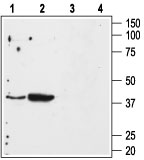
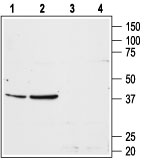
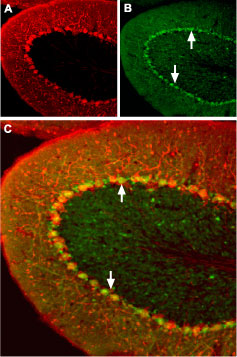
Images |
|
||
Specification |
|||
Quantity |
|
||
| Select | Brand | Catalog No. | Product Name | Pack Size | Type | Field of Research | Specification | Quantity | Price(USD) | |
| 1 | Leading Biology | APR03440G | ITGA11 Antibody (N-term) | 100 μl | Polyclonal Antibodies |
|
$495.00 | Add Ask | ||
| 2 | Leading Biology | APR04537G | CMIP Antibody (C-term) | 100 μl | Polyclonal Antibodies |
|
$495.00 | Add Ask | ||
| 3 | Leading Biology | APR12422G | Human H4 Histamine Receptor (extracellular) Antibody | 50 μl | Polyclonal Antibodies |
|
$695.00 | Add Ask | ||
| 4 | Leading Biology | APR03844G | UBE2W Antibody (C-term) | 100 μl | Polyclonal Antibodies |
|
$495.00 | Add Ask | ||
| 5 | Leading Biology | APR04349G | HECTD2 Antibody (N-term) | 100 μl | Polyclonal Antibodies |
|
$495.00 | Add Ask | ||
| 6 | Leading Biology | APR03502G | IGHG1 Antibody (Center) | 100 μl | Polyclonal Antibodies |
|
$495.00 | Add Ask |
Leading Biology Inc.
2600 Hilltop DR, Building G, B Suite C138
Richmond, CA, 94806
Tel: 1-661-524(LBI)-0262
Email: info@leadingbiology.com

You have 0 item in your cart
You have 0 item in your inquiry list