> Antigen, Antibodies, ELISA, Western Blot > Primary Antibody > Polyclonal Antibodies > Ret (extracellular) AntibodyBrand |
Leading Biology | Catalog Number |
APR00498G |
Product Type |
Polyclonal Antibodies | Field of Research |
|
Product Overview |
We constantly strive to ensure we provide our customers with the best antibodies. As a result of this work we offer this antibody in purified format.
We are in the process of updating our datasheets. If you have any questions regarding this update, please feel free to contact our technical support team.
This product is a high quality Ret (extracellular) Antibody.
|
||
Molecular Weight |
124319 Da
|
||
Host |
Rabbit
|
||
Species Reactivity |
Human, Mouse, Rat
|
||
Target |
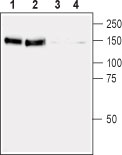
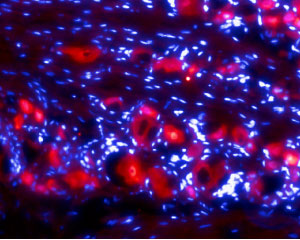
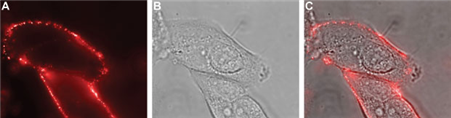
Peptide CEWRQGDGKGITR, corresponding to amino acid residues 541-553 of human Ret (Accession P07949). Extracellular, N-terminus.This antibody will recognize the intact Ret receptor and the cleaved Ret extracellular cell-membrane anchored fragment. It won't recognize the cleaved Ret kinase fragment.
|
||
GeneID |
|||
UniProt ID |
|||
Summary |
The RET proto-oncogene on human chromosome 10q11.2, encodes a receptor tyrosine kinase (RTK) activated by members of the glial cell line-derived neurotrophic factor (GDNF) ligand family (GDNF, neurturin, artemin, and persephin) in conjunction with a ligand-specific coreceptor (GFRα1-4)1. RET belongs to the cadherin superfamily, and it has been suggested that the ret gene is the result of a recombination between a gene encoding a tyrosine kinase receptor and a gene encoding an ancestral cadherin at an early stage of evolution2. The extracellular domain of RET comprises, as observed for other tyrosine kinase receptors, a cysteine-rich domain, but also four cadherin-like domains3.RET signaling is crucial for the development of the enteric nervous system. RET also regulates the development of sympathetic, parasympathetic, motor, and sensory neurons, and is necessary for the postnatal maintenance of dopaminergic neurons. Outside the nervous system, RET is crucial for development of the kidney and plays a key role in spermatogenesis3.RET has attracted considerable clinical interest because of the range of mutations found in diverse conditions that include Hirschsprung disease and a variety of cancers involving the thyroid gland. RET-related cancers with thyroid involvement include sporadic and familial medullary thyroid carcinoma (MTC), multiple endocrine neoplasia 2 (MEN2) syndromes MEN2A and MEN2B, and papillary thyroid carcinoma (PTC)4.
|
||
Form |
Liquid. Purified antibody supplied in 1x PBS buffer with 0.09% (w/v) sodium azide and 2% sucrose. |
||
Storage & Stability |
Store at +4°C short term. For long-term storage, aliquot and store at -20°C or below. Stable for 12 months at -20°C. Avoid repeated freeze-thaw cycles.
|
||
Applications |
WB, LCI
|
||
Dilution |
WB~~1:200-1:2000
IHC~~1:50
ICC~~1:25
FC~~1:20
|
||
Images |
|
||
Specification |
|||
Quantity |
|
||
| Select | Brand | Catalog No. | Product Name | Pack Size | Type | Field of Research | Specification | Quantity | Price(USD) | |
| 1 | Leading Biology | APR03440G | ITGA11 Antibody (N-term) | 100 μl | Polyclonal Antibodies |
|
$495.00 | Add Ask | ||
| 2 | Leading Biology | APR04537G | CMIP Antibody (C-term) | 100 μl | Polyclonal Antibodies |
|
$495.00 | Add Ask | ||
| 3 | Leading Biology | APR12422G | Human H4 Histamine Receptor (extracellular) Antibody | 50 μl | Polyclonal Antibodies |
|
$695.00 | Add Ask | ||
| 4 | Leading Biology | APR04349G | HECTD2 Antibody (N-term) | 100 μl | Polyclonal Antibodies |
|
$495.00 | Add Ask | ||
| 5 | Leading Biology | APR03844G | UBE2W Antibody (C-term) | 100 μl | Polyclonal Antibodies |
|
$495.00 | Add Ask | ||
| 6 | Leading Biology | APR03502G | IGHG1 Antibody (Center) | 100 μl | Polyclonal Antibodies |
|
$495.00 | Add Ask |
Leading Biology Inc.
2600 Hilltop DR, Building G, B Suite C138
Richmond, CA, 94806
Tel: 1-661-524(LBI)-0262
Email: info@leadingbiology.com

You have 0 item in your cart
You have 0 item in your inquiry list