


Introduction
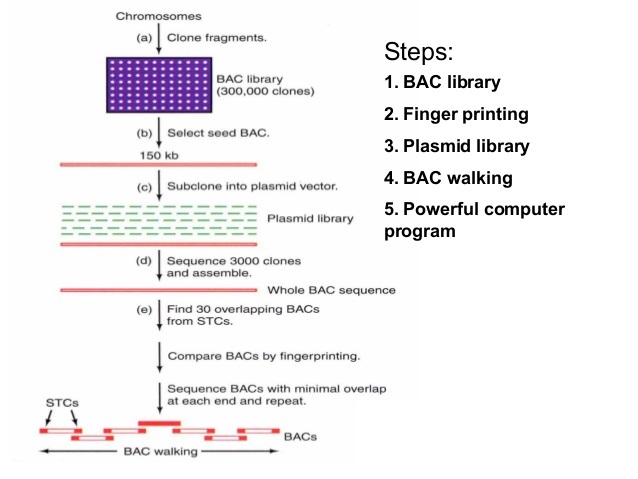
Bacterial Artificial Chromosome (BAC) is a DNA construct, based on a functional fertility plasmid (F-plasmid), used for transforming and cloning in bacteria, usually E. coli. BACs are often used to sequence the genome of organisms. A short piece of the organism's DNA is amplified as an insert in BACs, and then sequenced. Finally, the sequenced parts are rearranged in silico, resulting in the genomic sequence of the organism.
As a Large-insert genomic DNA libraries in bacteria, BAC libraries could provide a way to divide the complexity of the human genome into a composite of large DNA segments of reduced complexity. Ideally, BAC libraries should completely represent the genome without cloning artifacts or rearrangements and should be provided in an addressable format with clones physically separated. Today, BAC libraries are used as a source of substrates for shotgun sequencing projects to create a database of end sequences and restriction fingerprints for building overlapping clone sets, they also can provide scaffolding information for mapping sequence contigs to localized genomic regions by using a direct genomic shotgun sequencing approach.
| No | Headline | Click | Author | Date |
| 1 | Plant and Animal Whole Genome Re-Sequencing | 967 | Leading Biology | 2018-01-26 |
| 2 | Whole Exome Sequencing | 997 | Leading Biology | 2018-01-26 |
| 3 | Whole Transcriptome Shotgun Sequencing | 1487 | Leading Biology | 2018-01-26 |
| 4 | smallRNA/microRNA/circRNA/LncRNA Sequencing | 960 | Leading Biology | 2018-01-26 |
| 5 | Bacterial Genome Sequencing | 1040 | Leading Biology | 2018-01-26 |
| 6 | Targeted Gene Sequencing | 1103 | Leading Biology | 2018-01-26 |
Leading Biology Inc.
2600 Hilltop DR, Building G, B Suite C138
Richmond, CA, 94806
Tel: 1-661-524(LBI)-0262
Email: info@leadingbiology.com


