


The most important factor when designing an IHC/ICC experiment is selection of the primary antibody. In turn, the critical feature of a primary antibody is specificity for the epitope. All steps of an IHC/ICC experiment must be optimized to visualize specific staining and minimize non-specific background signals. This includes performing initial studies to determine the appropriate incubation conditions for each primary antibody. The working dilution for an antigen affinity-purified polyclonal antibody is generally lower than that of a monoclonal antibody but these values must be determined empirically. To achieve a robust and specific signal, a high quality antibody that exhibits minimal cross-reactivity should be employed.
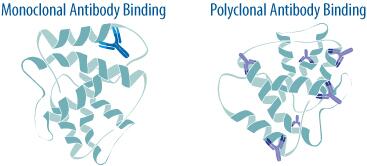
Optimization of Primary Antibody Incubation
Optimizing your antibody to increase specific staining and decrease non-specific background will improve your IHC staining data. The best antibody concentration, diluent, and incubation time should be determined to achieve the highest specific signal and lowest non-specific background signal.
To begin optimizing, often antibody concentration is varied while incubation time remains constant. To help determine an optimal starting concentration, Leading Biology recommends an application specific dilution range for most antibodies. Note that the recommended dilution of immunogen affinity purified antibodies is typically lower than the recommended dilution for monoclonal antibodies (1.7-15 ug/mL polyclonal vs. 5-25 ug/mL monoclonal). This is due to the ability of polyclonal antibodies to bind multiple epitopes of the same antigen. In addition to concentration, incubation temperature and time affect antibody binding and may require optimization. A higher concentration antibody may require shorter incubation time than the same antibody at a lower concentration. It should be noted that longer incubation periods can increase non-specific signal. Therefore, incubation at a lower temperature is recommended If a long incubation period is necessary (i.e. 4 °C versus room temperature). The Leading Biology IHC staining protocol recommends an overnight incubation step at 4 °C for most antibodies.
|
|
Monoclonal Antibody |
Polyclonal Antibody |
|
Tissue |
5-25 µg/mL, overnight at 4 °C |
1.7-15 µg/mL, overnight at 4 °C |
|
Cells |
5-25 µg/mL, 1 hour at room temperature |
1.7-15 µg/mL, 1 hour at room temperature |
|
Advantage |
Single epitope specificity |
Lower concentration required |
|
Limitation |
Vulnerable to epitope masking |
Heterogeneous population |
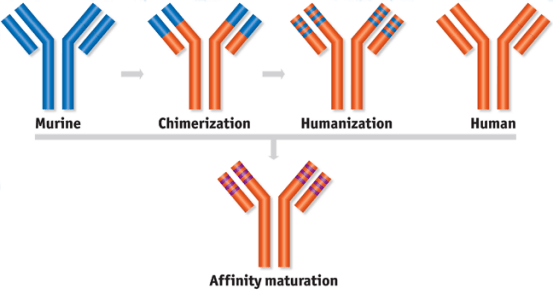
General procedure of antibody optimization
1. Conjugate target antigens to magnetic beads and a flourophore, if they are not provided by clients;
2. Establish the base line antigen binding surface displayed antibody;
3. Design and construct focused libraries and screen for higher binding affinity;
4. Library screening based on antigen binding;
5. Isolate top 10 antibody clones, and measure binding affinity in comparison to starting antibody;
6. Recover DNA sequences of confirmed clones;
7. Reconstruct, transient express, and purify 100 ug protein;
8. Measure kinetic binding affinity of affinity-matured antibodies using Biacore or Octet in comparison to starting antibody.
Contact us to see how we can improve your antibody.
| No | Headline | Click | Author | Date |
| 1 | ScFv Phage Library Construction Service | 1392 | Leading Biology | 2020-05-27 |
| 2 | ScFv Phage Library Screening Service | 938 | Leading Biology | 2020-05-25 |
| 3 | Antibody Optimization Service | 811 | Leading Biology | 2020-05-25 |
| 4 | FcR Binding Assay Services | 1447 | Leading Biology | 2020-05-22 |
| 5 | Recombinant Antibody (IgG) Production Services | 944 | Leading Biology | 2020-05-21 |
| 6 | Recombinant Antibody (scFv) Production Services | 1176 | Leading Biology | 2020-05-20 |
Leading Biology Inc.
2600 Hilltop DR, Building G, B Suite C138
Richmond, CA, 94806
Tel: 1-661-524(LBI)-0262
Email: info@leadingbiology.com


