

> Custom Services > Molecular Biology Services > Recombinant Plasmid Construction and Gene Targeting
Recombinant Plasmid Construction
Recombinant Plasmids are the plasmid molecules which contain the target DNA fragment, and the process of introducing genes into a vector to form a new DNA molecule which can be replicated in a host cell is called Recombinant Plasmid Construction (Recombinant Cloning), the word “Recombinant” means that two different strands of DNA that would not normally occur together are combined and the cloning means creating multiple copies of genetically identical organisms.

Gene Targeting
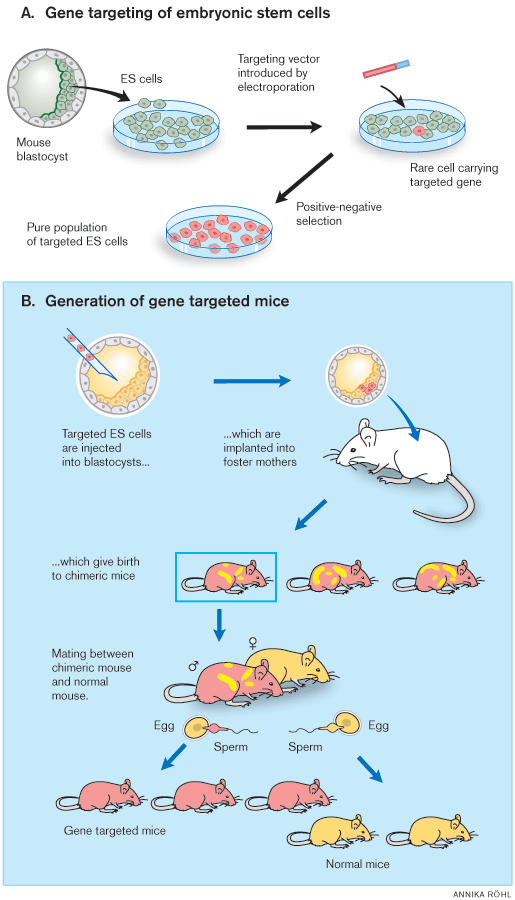
Gene targeting is the process of disrupting or mutating a specific genetic locus in embryonic stem (ES) cells, usually with the intention of making knock-out or knock-in mice. This method can be used for many proposes, including delete or insert mutations into genes of interest to determine their function; introduce human genes into the genome of mice to generate animal models enabling the study of human-specific genes and diseases; introduce individual genes or genomes of pathogens (e.g. viruses) in order to examine the contributions of such genes to the pathogenesis of the parent pathogens, or introduce reporter genes that allow monitoring in vivo or ex vivo the expression of genes of interest.
Why Leading Biology?
At Leading Biology, we custom protein purification design for every single protein to ensure the production and recovery rate as high as possible.
Working with us, you will get stability, and it means a reliable partner to help streamline your R&D process.
Working with us, you will get the guaranteed service to accommodate your requirements.
· Vigorous quality control system to ensure the required quality and reproducibility
· Competitive price with fast turnaround time
Contact Information
Please obtain a quote before ordering, and refer to the quote number when you place an order.
Orders are typically confirmed within 12 hours.
Have a Question? Email us info@leadingbiology.com
Order Products: Order Related Products
By Phone: 1-661-524(LBI)-0262 (USA)
| No | Headline | Click | Author | Date |
| 1 | siRNA/shRNA gene knockdown | 1738 | Leading Biology | 2018-01-26 |
| 2 | Tetracycline Induced Gene knockout/knockin | 1939 | Leading Biology | 2018-01-26 |
| 3 | New Generation Embryonic Stem Cells Gene Targeting | 1940 | Leading Biology | 2018-01-26 |
| 4 | TALEN Technology | 1781 | Leading Biology | 2018-01-26 |
| 5 | CRISPR-CAS Technology | 2204 | Leading Biology | 2018-01-26 |
| 6 | Microorganisms Gene Modification Services | 1674 | Leading Biology | 2018-01-26 |
Leading Biology Inc.
2600 Hilltop DR, Building G, B Suite C138
Richmond, CA, 94806
Tel: 1-661-524(LBI)-0262
Email: info@leadingbiology.com


