

> Custom Services > Molecular Biology Services > Vector Construction, transfection&co-localization analysis
Vector Construction
Plasmid vector construction is an essential step for molecular microbiology. Manipulation of the fungal genome to express genes to activate secondary metabolite production often requires creation of plasmid constructs in a reiterative fashion. Plasmids were recognized as a convenient means to package foreign DNA for molecular cloning strategies allowing for mass production of certain genes and encoding proteins in a desired host. Thus, gene cloning and vector construction are routine procedures in genomic studies.
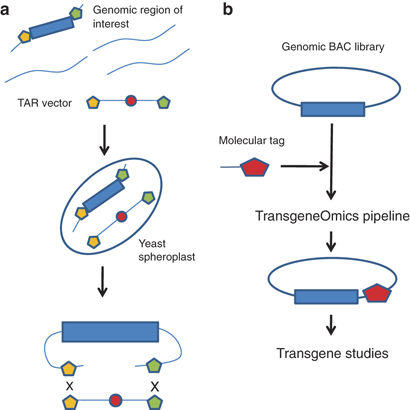
Fig. 1 Construction of genomic vectors for gene expression
Transfection
Co-localization Analysis
Co-localization analysis is an advanced digital imaging tool to observe the spatial overlap between two (or more) different fluorescent labels, each having a separate emission wavelength to see if the different “targets” are located in the same area of the cell or very near to one another. This technique is important to many cell biological and physiological studies during the demonstration of a relationship between pairs of bio-molecules.
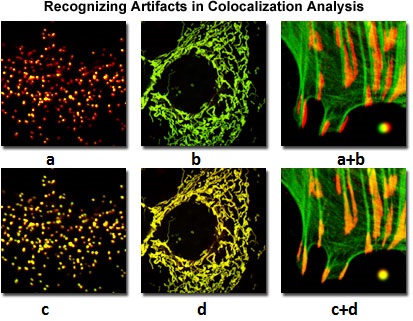
Fig.2 Co-localization Analysis
Why Leading Biology?
Working with us, you will get stability, and it means a reliable partner to help streamline your R&D process.
Working with us, you will get the guaranteed service to accommodate your requirements.
· Vigorous quality control system to ensure the required quality and reproducibility
· Competitive price with fast turnaround time
Contact Information
Please obtain a quote before ordering, and refer to the quote number when you place an order.
Orders are typically confirmed within 12 hours.
Have a Question? Email us info@leadingbiology.com
Order Products: Order Related Products
By Phone: 1-661-524(LBI)-0262 (USA)
| No | Headline | Click | Author | Date |
| 1 | siRNA/shRNA gene knockdown | 1779 | Leading Biology | 2018-01-26 |
| 2 | Tetracycline Induced Gene knockout/knockin | 1977 | Leading Biology | 2018-01-26 |
| 3 | New Generation Embryonic Stem Cells Gene Targeting | 1983 | Leading Biology | 2018-01-26 |
| 4 | TALEN Technology | 1813 | Leading Biology | 2018-01-26 |
| 5 | CRISPR-CAS Technology | 2246 | Leading Biology | 2018-01-26 |
| 6 | Microorganisms Gene Modification Services | 1711 | Leading Biology | 2018-01-26 |
Leading Biology Inc.
2600 Hilltop DR, Building G, B Suite C138
Richmond, CA, 94806
Tel: 1-661-524(LBI)-0262
Email: info@leadingbiology.com


