


Introduction
RNA pull-down assay is a technique used to detect the RNA-protein interactions using immunoprecipitation (IP). This technique is commonly used to either confirm the presence of a scant protein or enrich the population of a particular protein, as well as to identify natural binding partners for the captured protein.
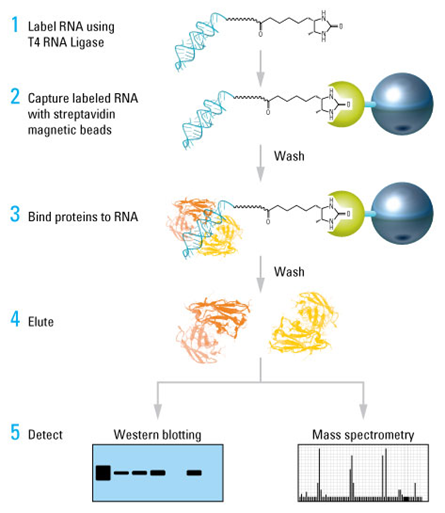
Biotinylated RNA-pulldown is a useful pulldown Method which theoretically works for all RNA-binding proteins (RBPs), as this assay is performed in a cell-free system. The first step of this method is to synthesis RNAs of interest in the presence of biotinylated cytidine triphosphate (CTP); the RNA then incubated with a cell-free system to allow RBPs to recognize RNA regions to which it has an affinity, while other regions won’t interact with RBPs. After binding complete, the biotinylate tagged RNA is pulled down using streptavidin-coated beads and the RBPs are typically detected by Western blot analysis.
Why Leading Biology?
At Leading Biology, we custom protein purification design for every single protein to ensure the production and recovery rate as high as possible.
Working with us, you will get stability, and it means a reliable partner to help streamline your R&D process.
Working with us, you will get the guaranteed service to accommodate your requirements.
· Vigorous quality control system to ensure the required quality and reproducibility
· Competitive price with fast turnaround time
Contact Information
Please obtain a quote before ordering, and refer to the quote number when you place an order.
Orders are typically confirmed within 12 hours.
Have a Question? Email us info@leadingbiology.com
Order Products: Order Related Products
By Phone: 1-661-524(LBI)-0262 (USA)
| No | Headline | Click | Author | Date |
| 1 | siRNA/shRNA gene knockdown | 1738 | Leading Biology | 2018-01-26 |
| 2 | Tetracycline Induced Gene knockout/knockin | 1939 | Leading Biology | 2018-01-26 |
| 3 | New Generation Embryonic Stem Cells Gene Targeting | 1940 | Leading Biology | 2018-01-26 |
| 4 | TALEN Technology | 1781 | Leading Biology | 2018-01-26 |
| 5 | CRISPR-CAS Technology | 2204 | Leading Biology | 2018-01-26 |
| 6 | Microorganisms Gene Modification Services | 1674 | Leading Biology | 2018-01-26 |
Leading Biology Inc.
2600 Hilltop DR, Building G, B Suite C138
Richmond, CA, 94806
Tel: 1-661-524(LBI)-0262
Email: info@leadingbiology.com


