

> Information Center > Technical FAQs > Antibody Technology Column > What are antigens and antibodies? How many types of them are
Antigens are molecules capable of stimulating an immune response. Each antigen has distinct surface features, or epitopes, resulting in specific responses.
Antibodies (immunoglobins) are Y-shaped proteins produced by B cells of the immune system in response to exposure to antigens. Each antibody contains a paratope which recognizes a specific epitope on an antigen, acting like a lock and key binding mechanism. This binding helps to eliminate antigens from the body, either by direct neutralization or by ‘tagging’ for other arms of the immune system.
|
|
Antigen |
Antibody |
|
Overview |
Substance that can induce an immune response |
Proteins that recognize and bind to antigens |
|
Molecule type |
Usually proteins, may also be polysaccharides, lipids or nucleic acids |
Proteins |
|
Origin |
Within the body or externally |
Within the body |
|
Specific binding site |
Epitope |
Paratope |
|
Image |
|
|
Vaccines contain antigens which stimulate the B lymphocytes of the immune system to respond by producing plasma cells which secrete disease specific antibodies (Primary response). Some of the B cells become memory B cells, which will recognise future exposure to the disease. This results in a faster and more intense production of antibodies, which effectively work to eliminate the disease by binding to the antigens (Secondary response).
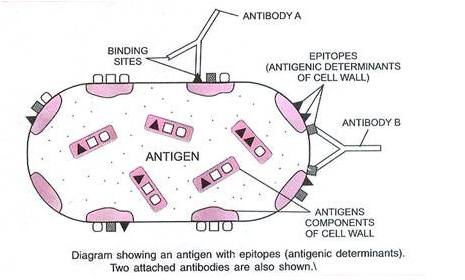
Based upon the ability of antigens to carry out their functions, antigens are of two types: complete antigens and incomplete antigens (haptens). A complete antigen is able to induce antibody formation and produce a specific and observable reaction with the antibody so produced.
Haptens (Gr. hapten to grasp; partial antigens) are substances which are incapable of inducing antibody formation by themselves, but can be capable of inducing antibodies on combining with larger molecules (normally proteins) which serve as carriers.
Antigens which are present on the body’s own cells are called the auto-antigens or self antigens. The antigens on the non-self cells are known as foreign antigens or non-self antigens.
Leading Biology Inc.
2600 Hilltop DR, Building G, B Suite C138
Richmond, CA, 94806
Tel: 1-661-524(LBI)-0262
Email: info@leadingbiology.com


