

> Information Center > Technical FAQs > Peptides Synthesis Technology Column > What are the benefits of recombinant DNA technology? 
Recombinant DNA technology is a major DNA-based tool that opens a new age for modern biotechnology. With this technology, a gene or multiple genes can be identified, cut, and inserted into the genome of another organism. Using this technology, the first drugs of medical biotechnology were produced, namely human insulin.
The first concept for recombinant DNA technology came from Werner Arber’s discovery of restriction enzymes in bacteria that degrade foreign viral DNA molecules. From this discovery, geneticists learned to “cut” and “paste” DNA molecules, and novel restriction enzymes for cutting, and pasting were discovered or invented. The development of recombinant DNA technology was advanced by the collaboration of Stanley Cohen and Herbert Boyer in 1972. They also established the first company that focused on recombinant DNA technology (Genentech) in 1976.
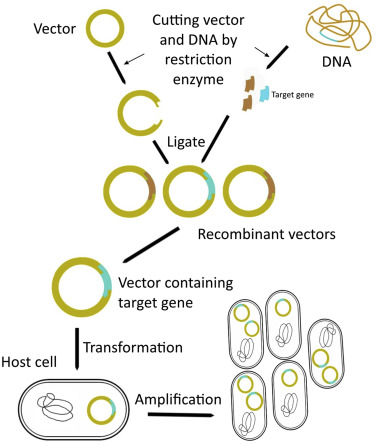
Recombinant DNA technology relates to the usage of three main tools: (1) enzymes (restriction enzymes, polymerases, and ligases); (2) vectors; and (3) host organism. The enzymes will help cut (restriction enzymes), synthesize (polymerases), and bind (ligases) DNA. The restriction enzymes play an important role in this technology. The restriction enzyme will cut at a specific site within the DNA molecule called a restriction site. Usually, the restriction enzyme will produce sticky ends in the DNA sequence that will help it bind specifically to the desired gene. The vector will carry the desired gene. Vectors are important parts of the recombinant DNA technology. They are considered as the final vehicles that carry genes of interest into the host organism. Several types of vectors have been developed to date; however, the most commonly used vectors are plasmids and bacteriophages. A vector must contain the same restriction sites that are found within the desired gene to facilitate gene integration. Besides, vectors should also carry sequences for selection and identification, such as a gene for ampicillin resistance and cloning sites. The host organism is the cell in which the recombinant DNA is introduced. To date, host organisms include bacteria, fungi, and animal cells. To introduce vectors into hosts, techniques involving microinjection, biolistics, gene gun, alternate cooling and heating, and calcium phosphate ions have been used.
In generally, a recombinant DNA technology has five steps: (1) cutting the desired DNA by restriction sites, (2) amplifying the gene copies by PCR, (3) inserting the genes into the vectors, (4) transferring the vectors into host organism, and (5) obtaining the products of recombinant genes .
Leading Biology Inc.
2600 Hilltop DR, Building G, B Suite C138
Richmond, CA, 94806
Tel: 1-661-524(LBI)-0262
Email: info@leadingbiology.com


